
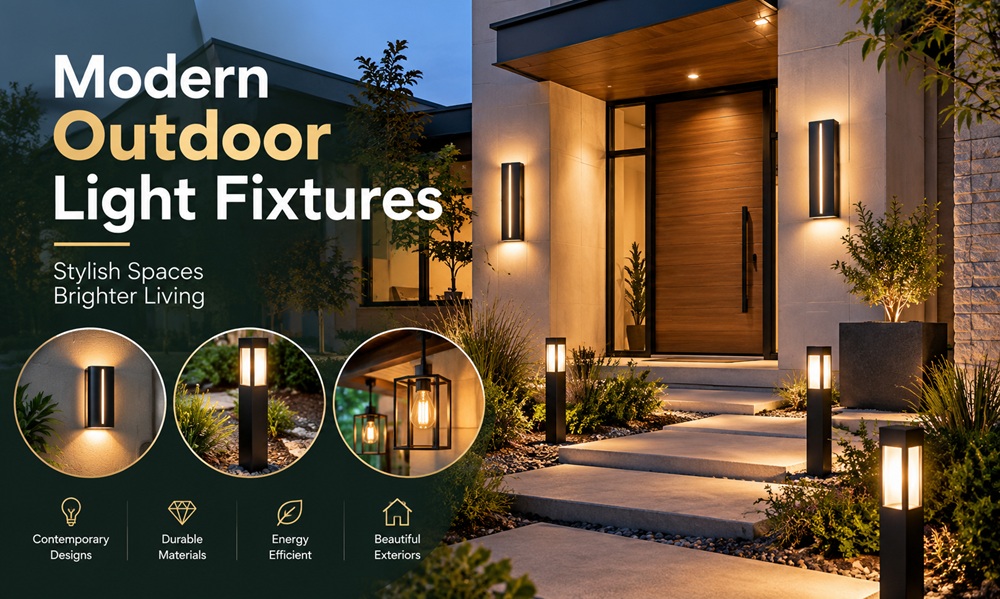
Modern outdoor light fixtures share a few traits. They have clean lines, little decoration, shielded light sources, and usually built-in LEDs rather than old style bulbs. Beyond that common look, the category covers a lot, from slim wall bars to ground-level bollards, so choosing well means knowing what each type does best.
What Makes a Fixture Look Modern
Modern design leans on simplicity. Look for geometric shapes such as cylinders, boxes, rectangles, and thin lines. Surfaces tend to be smooth and matte, and ornament is rare. The light often comes from behind a diffuser or from a narrow slot, so the fixture glows rather than shows a bare bulb.
That simplicity means details stand out. A cheap finish, a visible seam, or crooked mounting is far more noticeable on a minimal fixture than on a decorative lantern, so quality and careful installation matter more than they do with traditional styles.
Common Types and Where They Fit
Wall sconces and cylinders. Cylinder fixtures send light up, down, or both, creating crisp arcs on the wall. They suit entryways, garage doors, and patios, and a pair beside a door reads as clean and intentional.
Linear bars. Long, slim fixtures work well beside tall doors, along a wall, or above a garage. Their length gives them a strong presence, but they need enough wall space to avoid looking cramped.
Box and cube lights. These offer a more solid look and often shine light in a controlled direction. They suit homes with flat roofs and strong horizontal lines.
Flush and slim ceiling lights. On a covered porch or entry, a low profile disk or square keeps the ceiling clean. Many now have a thin edge or diffuser that spreads light evenly.
Pendants. A hanging fixture with a simple shade or sphere can mark an entry or sit over an outdoor dining table. Check the rating, because hanging fixtures face more wind and moisture.
Path lights and bollards. Low, slim posts light walkways with downward beams. Modern versions usually hide the source and focus on the ground rather than lighting the whole yard.
Step and wall washers. Small recessed units set into walls, risers, or retaining walls provide light close to where people walk, which feels safer and quieter than a high fixture.
Spotlights and uplights. Compact, adjustable fixtures aim light at trees, walls, and architectural features. They’re accent tools rather than main light sources.
Finishes and Materials
Black is the safe modern choice and pairs well with windows, door hardware, and house numbers. White suits light exteriors, though it shows dirt faster. Bronze and dark gray work with natural materials. Brushed brass, copper, and stainless steel add warmth or contrast but should match the other metals on the house.
For material, powder coated aluminum is common because it’s light and resists rust. Solid brass and stainless steel are heavier and more expensive, yet they hold up well over time and in coastal areas. Plastic housings cost less but may fade or crack in strong sun.
Integrated LED or Replaceable Bulb
Many modern fixtures have integrated LEDs, meaning the light source is built in. That allows slim shapes and even light, and the fixture can last for years. The tradeoff is that when the LED module fails, you often replace the whole fixture. Fixtures with replaceable bulbs are easier to repair and let you change color temperature, though they tend to be bulkier.
Neither choice is wrong. For an entry fixture you want to keep for a long time, a quality integrated model is convenient. For something you may modify, a replaceable bulb offers flexibility.
Light Direction and Why It Matters
The way a fixture throws light affects the mood and function as much as its shape. Up and down fixtures create two arcs on the wall and make a strong decorative statement, though they provide less light on the ground. Downward only fixtures deliver more usable light for steps and doors while keeping the wall clean. Upward only fixtures add drama and suit tall walls or columns.
Pick the direction based on your goal. If safety is the priority, send light toward the ground. If you want a decorative glow, up and down works. Shielded fixtures also reduce glare and keep light from spilling into the sky, which neighbors tend to appreciate.
Size and Proportion
A common mistake with modern fixtures is choosing something too small. Their simple shapes can look lost against a wide door or a large wall. Hold a cardboard template or a measuring tape against the surface and imagine the fixture there. Tall entry doors and big garage doors usually look better with larger or longer fixtures, while small porches and narrow walls need compact ones.
Spacing counts too. Place paired fixtures at the same height, line them up with the door frame or a window, and keep them far enough from corners that the light isn’t cut off.
What to Read on the Label
Before buying, check these details in order.
- The location rating, either damp or wet, to match where it will hang.
- The lumen output, so the fixture isn’t too dim or too bright.
- The color temperature, ideally warm for entrances and the same across the facade.
- The beam direction, such as up, down, or both.
- Dimming compatibility if you plan to use a dimmer.
- The warranty and whether replacement parts are available.
If a listing lacks these details, treat that as a warning sign.
Mixing Fixtures Without Creating a Mess
A modern house looks best with a small, consistent set of fixtures. Pick one finish and a few shapes that repeat. For example, use cylinders at the entry and garage, slim path lights on the walkway, and small spots for trees. When the shapes repeat, the exterior feels planned.
Avoid mixing styles that clash, such as ornate lanterns beside sharp linear bars. If you inherit older fixtures you can’t replace yet, keep their finish consistent with the new ones so at least the color matches.
Mistakes to Avoid
Choosing by photo alone leads to many returns, because scale is hard to judge online. Check the dimensions and compare them with your door and wall. Another frequent mistake is ignoring glare. Minimal fixtures with exposed LEDs can look harsh if you stand in front of them, so choose diffused or recessed light sources where people look straight at the fixture.
Also avoid skipping installation details. Mount fixtures level, align them with each other, and hide wiring. On a simple modern wall, a crooked light or visible wire stands out immediately.
Care and Cleaning
Minimal fixtures show dirt and water spots more easily than decorative ones. Wipe the housing and diffuser with a soft cloth and mild soap a few times a year, and avoid abrasive cleaners that scratch matte finishes. Check mounting screws and seals each spring, and look inside the diffuser for trapped insects or moisture. A little upkeep keeps the lines crisp and the light even.
A Final Check Before You Buy
Hold a template against the wall, confirm the weather rating, and make sure the finish matches nearby hardware. Then think about how the light will look from the street at night, not just in the daytime catalog photo. Good modern outdoor light fixtures disappear into the design during the day and show their value only after dark, which is exactly how they should work.