
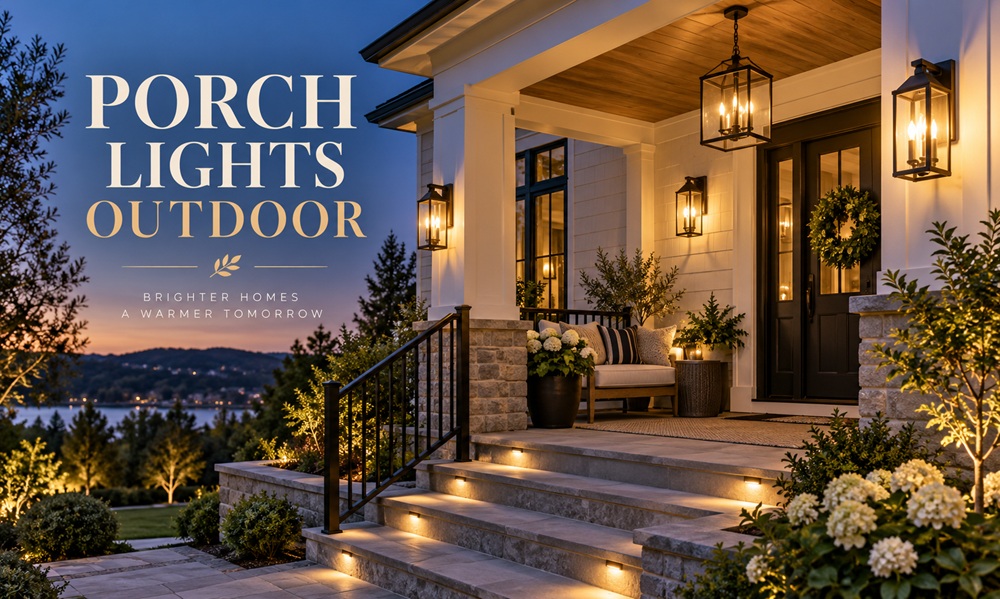
Outdoor porch lights have a tougher life than anything you hang indoors. They deal with rain, snow, heat, bugs, and sun every day, so the right ones are built for it and the wrong ones start rusting or fogging within a season or two. The short version is to look for a wet or damp location rating, a finish that resists corrosion, and a sealed design that keeps moisture away from the bulb and wiring.
Damp Rated and Wet Rated Are Not the Same
Safety listings are printed on the box or the fixture label, and they tell you where the light is allowed to go.
A damp location rating suits places that get moisture in the air but not direct water, such as a deep covered porch with a ceiling. A wet location rating means the fixture is designed to take direct exposure, like rain blowing sideways onto a wall mount at an open front door.
When you’re not sure, choose wet rated. It costs little or nothing extra on most fixtures and removes the guesswork. A light that’s only damp rated can work fine under a roof, but it’s a gamble on an exposed wall.
You’ll also see ingress protection ratings on some products, written as IP followed by two numbers. Higher numbers generally mean better protection against dust and water. Ordinary hardwired porch fixtures often skip these, but they’re useful when comparing solar or plug-in products.
Materials That Hold Up
The finish decides whether your light still looks good in three years.
Cast aluminum is a common choice, light and naturally resistant to rust, especially when powder coated. Solid brass and copper age well and develop a patina that some homeowners love, though they can cost more. Stainless steel handles weather nicely but can show water spots. Plastic and resin fixtures are budget friendly and won’t rust, yet they can fade or turn brittle in strong sun.
If you live near the ocean, salt air is rough on cheaper finishes, so look for products described as marine grade or suitable for coastal use, and expect to rinse the fixture with fresh water now and then. In very hot, sunny regions, glass and metal hold up better than thin plastic.
Check the screws and gaskets too. A rubber gasket between the fixture and the wall helps keep water out of the junction box, and stainless fasteners don’t leave rust streaks down the siding.
Choosing Bulbs and Brightness
LED bulbs are the sensible default outdoors. They handle cold weather well, last a long time, and put off little heat. Look for bulbs labeled for outdoor or wet use, and if the fixture is fully enclosed, confirm the bulb is approved for an enclosed fixture, since trapped heat shortens the life of some bulbs.
Choose warm white, around 2700K to 3000K, for a welcoming glow that looks natural against siding and brick. A rough working range for a porch is a few hundred lumens per fixture, a bit more for large porches or dark surroundings. Brighter isn’t automatically better. Too much light makes the porch look stark and annoys the neighbors.
Features Worth Paying For
Not every extra earns its price. These tend to be the most useful.
- Photocell sensors switch the light on at dusk and off at dawn, which is handy if you forget or travel often.
- Motion sensors are better suited to side doors and dark corners than the front entry, where a light that blinks on and off can feel jumpy.
- Timers and smart controls let you set evening schedules and adjust brightness from a phone.
- Dimmable bulbs only work properly with a compatible dimmer, so check both before you buy.
Skip features you won’t use. A simple, well sealed fixture on a good switch outperforms a complicated one that never gets configured.
Matching the Fixture to the Spot
The right design depends on where the light will hang. Wall lanterns and sconces suit the sides of a door and give the most flexibility with height and spacing. Ceiling mounted fixtures make sense on a covered porch, where a wall mount would leave the middle of the space dark. Floodlights and security style heads belong at the corners of the house or above a garage, not beside a front door, since their output is aimed and strong.
Think about glare as well. A clear glass fixture with an exposed bulb can look pretty by day and blind you at night. Frosted or textured glass spreads the light and hides the bulb, which makes the porch easier on the eyes and the neighbors.
Size counts here too. A fixture that’s too small looks lost beside a wide door, while one that’s too large can overpower a small stoop. Holding a paper template against the wall for a few minutes can save you from returning a fixture.
Replacing a Porch Light Safely
Swapping an existing fixture is a manageable weekend task for many homeowners, as long as you respect the electricity.
- Turn off the circuit at the breaker, not just the wall switch.
- Confirm the power is off with a non-contact voltage tester.
- Remove the old fixture and note how the wires connect.
- Check the junction box for damage, loose mounting, or old brittle insulation.
- Mount the new bracket, connect the matching wires with proper connectors, and tuck them into the box.
- Seal the edges where the fixture meets the wall with a bead of exterior caulk, leaving a small gap at the bottom so moisture can escape.
- Restore the power and test the light.
If the wiring looks old, cracked, or unfamiliar, or if you find aluminum wires, stop and call a licensed electrician. Local codes also vary, so a quick check with your building department is smart when you’re adding new fixtures rather than replacing existing ones.
Keeping Outdoor Lights in Good Shape
A bit of care extends the life of porch lights outdoor significantly.
Wipe the glass and housing a few times a year to remove dust, pollen, and spider webs, which collect fast around warm bulbs. Look for fogging or standing water inside the glass, which signals a failed seal. Check caulk and gaskets before winter, and replace cracked ones. If a bulb keeps burning out early, suspect heat buildup, the wrong bulb type, or a loose socket connection rather than bad luck.
Insects gather around bright white light, so warm bulbs also help keep the porch more comfortable.
Problems You Might Run Into
Most porch light troubles have simple causes. A light that flickers often points to a loose bulb, a worn socket, or an incompatible dimmer. Condensation inside the glass usually means a gasket has failed or the fixture wasn’t sealed well at installation. A fixture that trips the breaker, buzzes loudly, or feels hot to the touch deserves a careful look, because those can signal a wiring fault. Turn the power off and have an electrician check it rather than trying another bulb and hoping for the best.
A light that stays on all day often has a photocell that’s dirty or shaded, so clean the sensor window and make sure nothing is blocking it. If it still won’t switch off, the sensor itself may need replacing.
Pulling It Together
Start with the location rating, then choose a finish that suits your climate, then pick a warm LED bulb and only the features you’ll really use. Porch lights outdoor don’t have to be fancy, but they do have to be sealed and sensibly built, and that’s what keeps them working long after the novelty wears off.